


October 3-7, 2027
Whitefish, MT
About This Conference
Message From the Chairs
Dear IHC Delegates,
We are excited to announce the 2027 International Hydrogen Conference. This longstanding and prestigious conference has a rich history of hosting the leading scholars in the field of H-material interactions. The unique single-session format, thriving poster sessions, and collegial debate have made the IHC an event that the technical community has enjoyed for decades.
The 2027 International Hydrogen Conference will maintain its Rocky Mountain heritage. We are confident that delegates will enjoy a robust technical exchange along with opportunities to engage with the world class recreational activities in Whitefish, Montana which sites at the edge of the stunning Glacier National Park.
It is an exciting time to be researching H-materials interactions! There is a technology pull from several engineering disciplines that is providing the motivation and support to address longstanding technical challenges. The resulting novel and exciting research has coupled modern experimental technique, characterization approaches, and computational modeling to provide insights into the fundamental mechanisms governing H-material interactions.
Work in our field has the potential to impact important societal challenges and we look forward to providing a venue for researchers to reunite with colleagues, share their research, and debate their conclusions.
We hope to see you in Whitefish in 2027!!
May Martin and Jimmy Burns
Conference Co-Chairs
Conference Organization
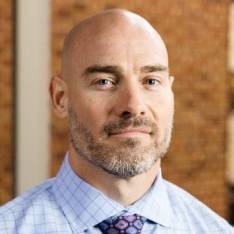
James T. Burns
University of Virginia
USA
James Burns joined academia in 2011 and is currently a Professor in the Center for Electrochemical Science and Engineering within the Department of Materials Science and Engineering at the University of Virginia. He was appointed as the Heinz and Doris Wilsdorf Chaired Research Professor in 2021 and the Copenhaver Fellow of the School of Engineering and Applied Sciences in 2024. He was promoted to Full Professor in August of 2025. Professor Burns received a B.S degree from the United States Air Force Academy in Engineering Mechanics (Materials track) with a Mathematics minor in 2002. He completed his M.S. and Ph.D in Material Science and Engineering at the University of Virginia in 2006 and 2010, respectively. After his commission into the US Air Force he served as an Aircraft Battle Damage Engineer and Assistant Aircraft Structural Integrity Program (ASIP) manager for the C-130 from 2002-2004 and as a Research Engineer at the Air Force Research Laboratory – Materials and Manufacturing Directorate from 2006-2010. His current research focuses on the intersection of metallurgy, solid mechanics and electrochemistry. Specifically, his group investigates the interaction of localized stress/strain with environment conditions, with a particular emphasis on behavior at the crack tip and H-metal interactions. In general, experimental data from controlled environmental testing are coupled with high fidelity characterization techniques to gain mechanistic understanding of the damage process; such knowledge is used to inform theoretical and engineering level models. He has been distinguished via the 2019 Engineering Excellence Award from the NASA Engineering Safety Center, the 2021 HH Uhlig Award from NACE International, and is a member of the editorial board for the International Journal of Fatigue and Engineering Fracture Mechanics journals. In 2025 Professor Burns was awarded the Presidential Early Career Award for Scientists and Engineers (PECASE) Award; this is the highest honor bestowed by the U.S. government on outstanding scientists and engineers beginning their independent careers.

May Martin
SINTEF
Norway
May L Martin received her B.S. degree in Materials Science and Engineering from Cornell University in 2005, and completed her Ph.D. at the University of Illinois at Urbana Champaign in 2013. Her PhD thesis, under Prof. Ian Robertson, was on understanding the connection between fracture and the Hydrogen Enhanced Localized Plasticity (HELP) mechanism. From 2014 to 2016, she was an Alexander von Humboldt post-doctoral research fellow at the Georg August University of Göttingen, Germany, as a guest of Prof. Reiner Kirchheim. The work focused on different hydrogen effects, from Hydrogen-Induced Cracking (HIC) to hydrogen-enhanced grain growth. From 2017-2026, she was a Materials Research Engineer at the National Institute of Standards and Technology, in the Fatigue and Fracture group. She is one of two current organizers of the International Hydrogen Conference, one of the oldest established conference series on hydrogen interactions with metals. Her research focuses on understanding the fracture processes of metals, especially under conditions of environmental degradation such as hydrogen embrittlement.
Scientific Organizing Committee
- Prof. Jamaa Bouhattate, La Rochelle Université, France
- Prof. Eason (Yi-Sheng) Chen, Nanyang Technological University, Singapore
- Prof. Zachary Harris, University of Pittsburgh, USA
- Prof. Masanobu Kubota, Kyushu University, Japan
- Prof. Jennifer Locke, Ohio State University, USA
- Prof. Emilio Martínez-Pañeda, University of Oxford, UK
- Dr. Laura Moli Sanchez, French Corrosion Institute, France
- Dr. Kevin Nibur, Hy-Performance Testing, USA
- Dr. Joseph Ronevich, Sandia National Labs, USA
- Dr. Neeraj Thirumalai, Exxon Mobil, USA
General Information About ECI
Engineering Conferences International (ECI) is a not-for-profit, global engineering conferences program, originally established in 1962 that provides opportunities for the exploration of problems and issues of concern to engineers and scientists from many disciplines.
The format of the conference provides morning and late afternoon or evening sessions in which major presentations are made. Poster sessions will be scheduled for evening discussion as well. Available time is included during the afternoons for ad hoc meetings, informal discussions, and/or recreation. This format is designed to enhance rapport among participants and promote dialogue on the development of the meeting. We believe the conferences have been instrumental in generating ideas and disseminating information to a greater extent than is possible through more conventional forums.
All participants are expected both to attend the entire conference and to contribute actively to the discussions. The recording/photographing of lectures and presentations is forbidden. As ECI conferences take place in an informal atmosphere - casual clothing is the usual attire.
Smoking is prohibited at ECI conferences and conference functions.